Latest Posts
Coming soon: multiplication, rounding and subtraction
With the new term looming why not get in some early maths practice? Next week we look again at multiplying 2-digit multiples of 10 by a single digit. Dead easy if tables are known.
Many children in Year 6 have difficulty reading and writing large numbers, including millions. We will be publishing a great page which looks at the area in square kilometres of some of the largest countries in the world.
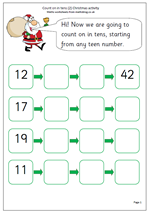
Younger children still need plenty of practice with adding and subtracting small numbers mentally. We will show a nifty way to give practice in subtracting a single digit from a teen in a slightly different way from the usual questions. Suitable for bright year 2 or year 3 children.
Year 5 Calculator game: 8 times table
This page is another in our calculator series, this time for the 8 times table. The grid has a selection of multiples of 8 up to 10 x 8. The idea is to play with a partner, choose a square and then enter a number on the calculator that you think will produce the number in the square when multiples by 8. if successful place a counter on the square. The aim is to try and get four in a row.
Remember that if the 8 times table is not known, multiplying by 8 can be achieved by doubling, doubling and doubling again.
This page can be found in our year 5 section under Knowing Number Facts
Resource of the Week: Year 4 division problems
This page has a range of different ways of asking division questions which children need to be able to recognise and there are a number of methods that can be used to work out the answers mentally.
It is important the tables are known so that the facts can be used. For example if it is known that 6 x 6 = 36, then 6 x 60 can be quickly worked out as 360, and in turn 360 divided by 6 is 60.
Another useful tip is when dividing by 5 mentally it is often possible to divide by 10 and then double the answer.
Please note: Factors need to have taught before trying this page.
Maths puzzle: One to nine (2)
Our first ‘One to Nine’ puzzle proved to be very popular so here is another. Aimed at upper juniors, (9-11 yr old) there are a few points to consider when getting started with these puzzles.
Firstly, the rules of Bodmas do not apply; the sentence is calculated in the order shown.
Secondly, each digit can only be used once.
Thirdly, if looking at a sentence such as a x b – c = 51, a x b can only be a maximum of 60 as the largest number to subtract is 9.
Year 6 maths worksheet: Estimating on a number line
This is the follow up maths worksheet to the earlier explanation on how to estimate on a number line up to 10 000.
Most of the work on number lines in year 6 involve using decimals so this is a good chance to make sure that large whole numbers are understood. All answers are approximate but a guess can be considered good if it is about 50 either side of the answer given. It is also worth noting that because the scale used is about 1.5 cm for a thousand and that a millimetre represents over 60, to get within 50 the approximation needs to be within a mm on the scale! Very tricky!
Coming soon: more estimating, number puzzle and calculator activities
Next week we have a follow up maths worksheet to the earlier explanation on how to estimate on a number line up to 10 000.
Most of the work on number lines in year 6 involve using decimals so this is a good chance to make sure that large whole numbers are understood. All answers are approximate but a guess can be considered good if it is about 50 either side of the answer given. Most suited to Year 6 (10/11 years old).
Our first ‘One to Nine’ puzzle proved to be very popular so we will be publishing another. Excellent quick activity for a wet break as the autumn term approaches.
We will also be publishing another in our calculator series, this time for the 8 times table. The grid has a selection of multiples of 8 up to 10 x 8. The idea is to play with a partner, choose a square and then enter a number on the calculator that you think will produce the number in the square when multiples by 8. if successful place a counter on the square. The aim is to try and get four in a row.
Remember that if the 8 times table is not known, multiplying by 8 can be achieved by doubling, doubling and doubling again.
This page will be found in our year 5 section under Knowing Number Facts.
Maths worksheet: Divide decimals by 10 or 100
This is the second in our revision sheets for dividing decimals by 10 or 100, ‘in your head’. A good understanding of place value is needed for this as there is little to do apart from move the numbers to the right. One place to the right divides by 10. Two places to the right divides by 100. Remember to put a zero in the units if there are no whole units: eg 8.7 divided by 10 is 0.87 not .87, as it would be very easy to miss the decimal and read this as 87.
Resource of the Week: Year 2 maths worksheet
This is the second page which looks in detail at a 1-100 number square and is excellent practice at understanding place value as well as counting.
A small section of the whole number square, just 4 by 3 is taken and most of the numbers removed. The skill is in replacing the missing numbers.
This can be done in a variety of ways. Probably the easiest way is to work across as each number is one more than the number to the left. One of the more interesting ways is to work down as each number is 10 more than the number above.
Missing numbers on a number square (pg 2)
Many more KS1 resources can be found at urbrainy.com
Year 3 maths worksheet: Make 5 sided shapes
By Year 3 children should be familiar with the names of 5 and 6 sided shapes: pentagons and hexagons. Usually these shapes are seen in a regular form and children do not always recognise them when they are irregular. This mini investigation will help with this. A geoboard is a great help. Schools already have these, but at home it is easy enough to make one – just 9 short nails evenly spaced in a block of wood and some elastic bands are all that is needed.
When doing this it can be quite tricky to recognise two shapes which are the same but just rotated.
How to estimate on a 0-10 000 number line
This is a much trickier exercise than it first appears. Firstly, children need to be confident with reading large numbers and counting in thousands. Secondly they need to be able to visualise marks on a scale.
Only the zero and 10 000 are marked on the number line so it would be a good idea to jot down each of the thousands before trying to estimate where the arrows are pointing.
Then it is a good idea to work out if the arrow is pointing above or below the half way mark and then make an intelligent estimate according to this.
- © 2009 Maths Blog
- Privacy Policy